


Page 84 - ΝUMO 2026
P. 84
FO L LOW / C o rf u LEGACY
BAND
In Corfu, where music shapes
cultural identity, the Corfu
Philharmonic Society stands as one
of the most enduring institutions in
modern Greek history.
Founded in 1840, the Corfu Philhar-
monic Society is the oldest philharmonic orchestra
on the island and the earliest organized music edu-
cation institution in Greece. Its creation was far more
than a cultural gesture. At a time when access to mu-
sic education was limited, it introduced a radically in-
clusive model, offering structured, high-level training
free of charge to students regardless of social class,
age, or gender. From the outset, its ambition was to
establish a comprehensive music academy inspired
by the great conservatories of Italy. Practical train-
ing in instruments and voice was paired with rigorous
theoretical study, from basic music theory to compo-
sition and aesthetics. This approach, combined with
its non-profit character, set a precedent that resonat-
ed far beyond Corfu. Throughout the 19th and early
20th centuries, the institution attracted and nurtured
some of the most influential figures in Greek music.
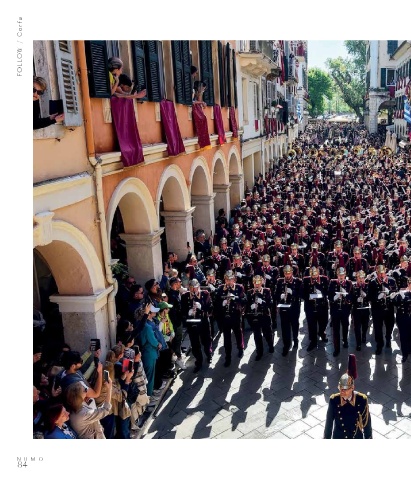
At the heart of the Philharmonic’s public presence is
its band, first formed in 1841. From its earliest appear-
ances, it became a symbol of civic pride and musical
excellence. It was the first ensemble to perform the
Greek National Anthem in 1864 and later played the
PHOTOGRAPHER: STAMATIS KATAPODIS evolve, welcoming new generations of students each
Olympic Hymn during the 1896 Olympic Games. In
recent decades, the Philharmonic has continued to
year. Housed since 1900 in a historic Corfiot palazzo
once belonging to the Georgios Theotokis family, its
physical presence is as layered as its history. More
than 180 years after its founding, the Corfu Philhar-
monic Society remains an extraordinary example of
how music can function as education, social equal-
N U MO izer, and cultural memory all at once. • N U MO
84 85

